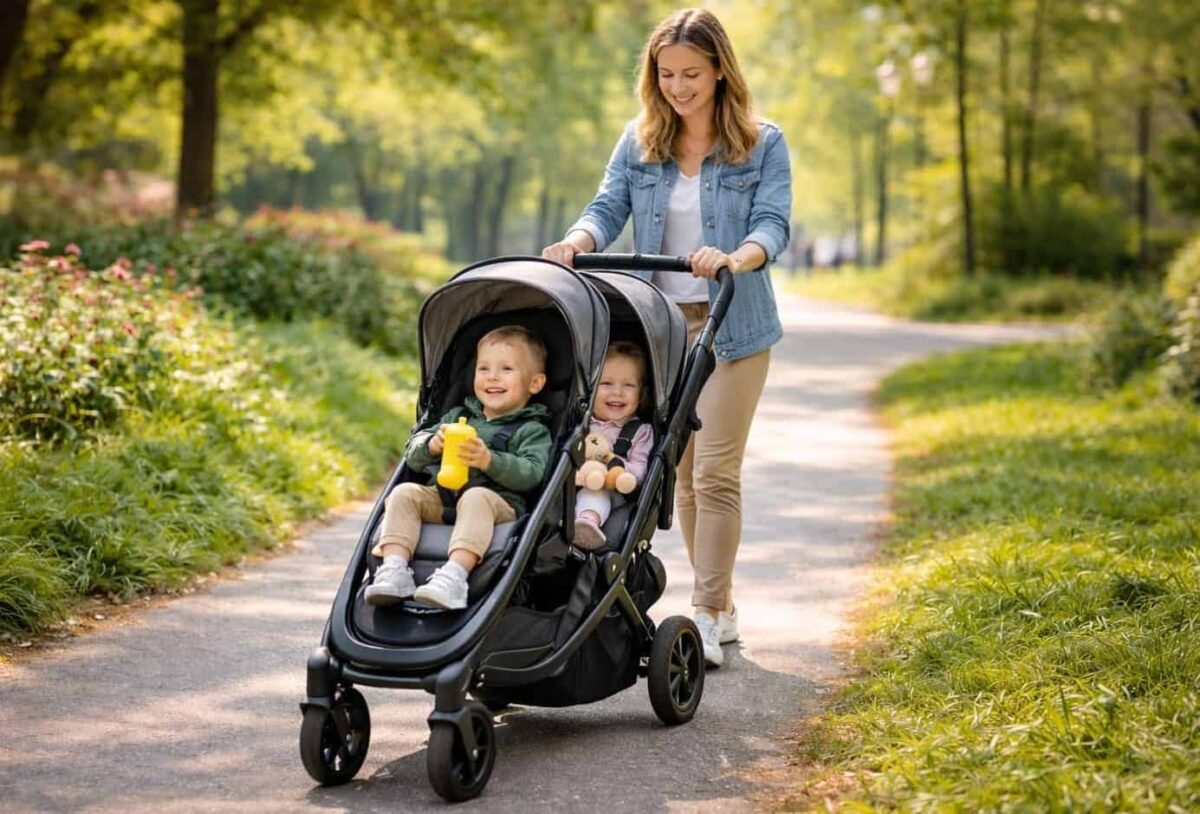
Families managing two young children at once depend heavily on equipment that is both durable and secure. Understanding the safety guidelines for using double strollers is essential to ensuring that every trip—whether a short neighborhood walk or a long day of errands—remains stable, controlled, and risk-free.
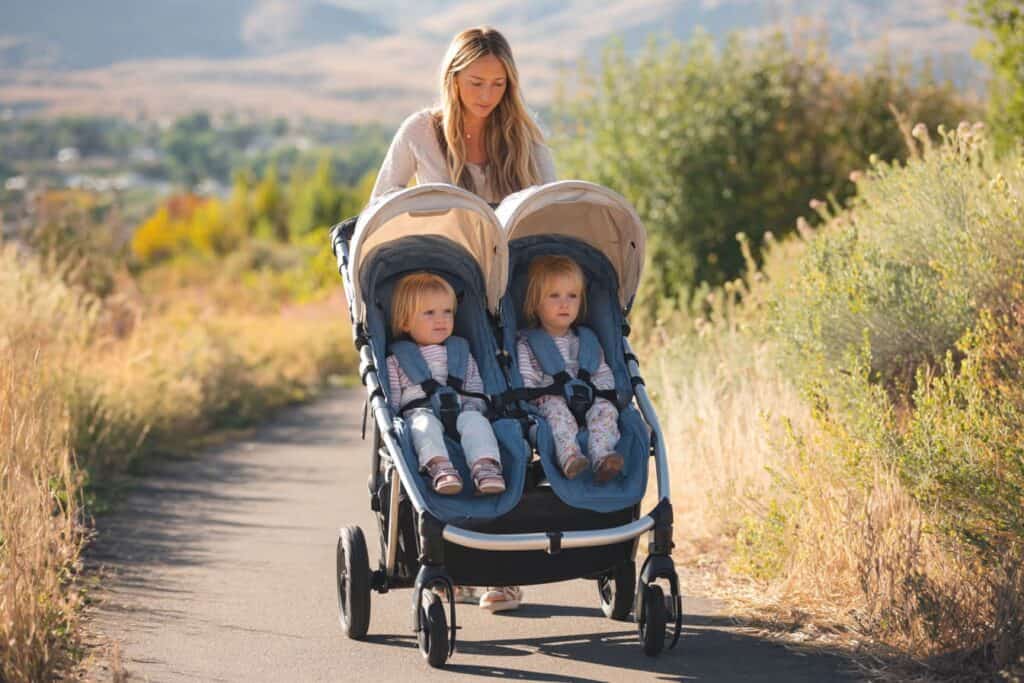
Double strollers are engineered to carry greater weight, accommodate wider seating configurations, and maintain balance across varied terrain, yet their effectiveness relies entirely on consistent, correct handling. By using clear safety practices, checking components regularly, and distributing weight properly, we make sure each outing protects children from preventable hazards while keeping things easy to move and the product reliable over time.
Understanding the Importance of Safety Guidelines for Using Double Strollers
Double strollers differ significantly from single-seat designs. Their extended frames, dual seating positions, and heavier load capacity require precise operation. Proper adherence to established safety protocols minimizes risks such as tipping, sudden rolling, or harness failure. The design advantages of double strollers—greater convenience, simultaneous transport, and shared storage—are fully realized only when caregivers implement disciplined usage habits.
Consistent safety practices protect:
- Passenger stability
- Frame integrity
- Brake responsiveness
- Wheel alignment
- Overall maneuver control
Maintaining these elements ensures reliable performance in both crowded environments and uneven outdoor terrain.
Selecting a Double Stroller That Meets Certified Safety Standards
Choosing a compliant, well-engineered stroller is the first and most critical step.
Confirm Recognized Safety Certifications
Every double stroller should display:
- ASTM compliance
- JPMA certification
- Clearly defined maximum seat weight limits
- Manufacturer documentation with verified safety testing results
These certifications demonstrate that the stroller has passed rigorous durability and restraint system evaluations, helping you choose the safest options featured in our Best Double Strollers for Infant and Toddler (2026 Guide).
Assess Frame Construction and Structural Stability
A dependable double stroller should feature:
- Reinforced aluminum or steel framework
- Secure locking joints
- Wide wheel spacing to reduce tip risk
- Even chassis distribution across both seating positions
A stable frame prevents unwanted flexing during turns or when transitioning over curbs.
Harness Systems: The Primary Passenger Protection Mechanism
Five-Point Harness Configuration
Each seat must include a five-point harness that secures:
- Shoulders
- Hips
- Center latch between the legs
This structure prevents forward slipping, standing attempts, or leaning beyond safe boundaries.
Correct Strap Adjustment Practices
To ensure proper fit:
- Harness straps should sit snugly against the child’s body
- Buckles must click securely into place
- No slack should remain near the shoulders or waist
Improperly adjusted harnesses reduce effectiveness during abrupt stops or sudden directional changes.
Managing Weight Distribution and Load Balance
Double strollers rely heavily on balanced weight for stability.
Follow Manufacturer Weight Limits Exactly
Each seating position is designed with a specific capacity. Exceeding limits can:
- Compromise braking efficiency
- Increase tipping probability
- Cause premature frame stress
If children differ in size, placing the heavier passenger closer to the handle often improves balance.
Avoid Excessive Storage Basket Loading
While storage compartments provide convenience, heavy loads—such as bulk groceries or large equipment bags—shift the stroller’s center of gravity. We should keep stored items light and evenly distributed.
Brake Engagement and Parking Safety Procedures
Reliable braking practices prevent unintended movement.
Always Lock Brakes When Stationary
Whenever the stroller is not actively in motion:
- Fully depress brake pedals
- Confirm wheels cannot rotate
This is especially critical when parked near curbs, slopes, or transit platforms.
Routine Brake Testing
Before each outing:
- Engage brakes
- Apply gentle forward pressure
- Verify the stroller remains fixed in place
Immediate maintenance is required if any rolling occurs.
Terrain Navigation and Environmental Awareness
Double strollers require more deliberate maneuvering across varied surfaces.
Avoid High-Risk Terrain
We should limit use on:
- Steep inclines
- Loose gravel
- Uneven pavement
When navigating unavoidable obstacles, maintain a two-handed grip and proceed at controlled speed.
Utilize Wheel Locking Features
Many double strollers include swivel-lock front wheels that improve tracking on rough ground. Engaging these features increases directional stability.
Safe Folding, Transport, and Storage Techniques
Improper folding can damage the frame or create pinch hazards.
Follow Manufacturer Folding Instructions Precisely
Before collapsing the stroller:
- Remove both children
- Empty all compartments
- Lock wheels
Use designated release levers rather than forcing movement.
Secure Placement During Vehicle Transport
When placing the folded stroller in a trunk:
- Prevent shifting with straps or cargo barriers
- Avoid stacking heavy items on top
- Ensure joints remain protected
Routine Inspection and Preventive Maintenance
Consistent upkeep extends product lifespan and preserves safety features.
Weekly Safety Inspection Checklist
We should examine:
- Harness stitching and buckles
- Wheel alignment
- Frame joints
- Brake engagement mechanisms
Cleaning debris from moving parts improves functionality.
Replace Worn Components Immediately
Frayed straps, cracked plastic connectors, or unstable wheels must be replaced without delay.
Sun Protection, Weather Readiness, and Passenger Comfort
Comfort supports calm behavior and stable seating.
Use Manufacturer-Approved Canopies
UV-protective canopies shield children from direct exposure while maintaining airflow.
Avoid Improvised Covers
Improper coverings may restrict ventilation or create overheating risks.
Monitor Temperature and Hydration
Dual seating can trap heat. We should schedule breaks and maintain airflow through adjustable panels.
Active Supervision Practices
No mechanical system replaces attentive oversight.
Maintain Continuous Observation
Children should never remain unattended in a stroller, even when brakes are engaged.
Use Safety Wrist Straps When Available
Handlebar tethers prevent the stroller from rolling away if grip is lost.
Common Errors That Increase Risk
Preventable mistakes frequently lead to instability.
- Hanging heavy bags from the handlebar
- Allowing children to climb independently
- Using non-approved accessories
- Ignoring unusual sounds or resistance during movement
Eliminating these behaviors preserves operational control.
Advanced Handling Techniques for Maximum Stability
Experienced users can enhance safety through controlled operation.
Gradual Turns and Controlled Stops
Abrupt directional changes increase tip risk due to the wider frame.
Maintain Low Center of Gravity
Heavier items should remain in the lower storage basket rather than higher positions.
Safety Guidelines for Using Double Strollers in Crowded or Public Spaces
Navigating busy environments requires heightened awareness.
Plan Accessible Routes
We should choose:
- Wide entryways
- Smooth pathways
- Elevator access points
Avoid Escalators Entirely
Escalators present severe tipping hazards and should never be used with any stroller.
Daily Operational Checklist
Before departure, confirm:
- Harnesses secured
- Brakes functioning
- Tires properly inflated
- Frame fully locked
- Weight limits respected
This routine ensures reliable readiness for safe travel.
Long-Term Storage and Seasonal Care
Clean and Dry Before Storage
Removing moisture prevents corrosion and mold.
Store in Stable Indoor Conditions
Avoid exposure to extreme heat or freezing temperatures that weaken materials.
Enhancing Comfort for Both Passengers
Balanced seating positions reduce movement that can shift weight distribution.
- Adjust recline individually
- Provide separate blankets
- Ensure proper foot support
Comfort promotes calm behavior, improving overall control.
Key Takeaways:
Establishing reliable routines grounded in safety guidelines for using double strollers ensures dependable protection during every outing. By maintaining secure harness systems, respecting weight limits, verifying brake functionality, and practicing attentive supervision, you preserve structural stability and prevent avoidable incidents.
The consistent application of these safety protocols transforms daily transport into a controlled, predictable, and secure experience for your children. Beyond immediate safety, proper usage supports long-term equipment reliability and confident handling across all environments. If you are still in the research phase, it is highly recommended to 11 Trusted Places to Test Strollers Before Buying to ensure the model you choose fits your specific handling needs.