Understanding when kids stop using strollers is one of the most common—and surprisingly nuanced—questions parents face. There is no single age that fits every child. Instead, the transition away from a stroller depends on developmental readiness, family lifestyle, health considerations, and environmental factors. In this comprehensive guide, we examine expert recommendations, child development research, and real-world parenting patterns to help families make confident, informed decisions.
Typical Age Range for Stopping Stroller Use
Most children stop using a stroller between ages 3 and 5. However, this range reflects averages, not rules.
- Ages 1–2: Strollers are essential for safety, endurance, and mobility
- Ages 2–3: Many toddlers walk independently but still need a stroller for longer outings
- Ages 3–4: Stroller use becomes occasional and situational
- Ages 4–5: Most children no longer rely on a stroller, except for travel or long days
Research in pediatric motor development shows that while walking skills mature early, endurance and emotional regulation continue developing well into the preschool years. This explains why many capable walkers still benefit from stroller use beyond age three.
Key Developmental Signs a Child Is Ready to Stop Using a Stroller
Rather than focusing on age alone, readiness is best measured through functional and behavioral cues.
Physical Readiness
A child may be ready to stop using a stroller when they can:
- Walk confidently on uneven surfaces
- Maintain a steady pace for 20–30 minutes
- Climb stairs without assistance
- Recover quickly after short periods of exertion
Cognitive and Emotional Readiness
Equally important are emotional and behavioral indicators:
- Ability to follow directions in public spaces
- Understanding of safety rules (staying close, stopping at crossings)
- Reduced reliance on the stroller for emotional comfort
- Willingness to take breaks without meltdowns
Children who meet these criteria often transition smoothly away from stroller dependence.
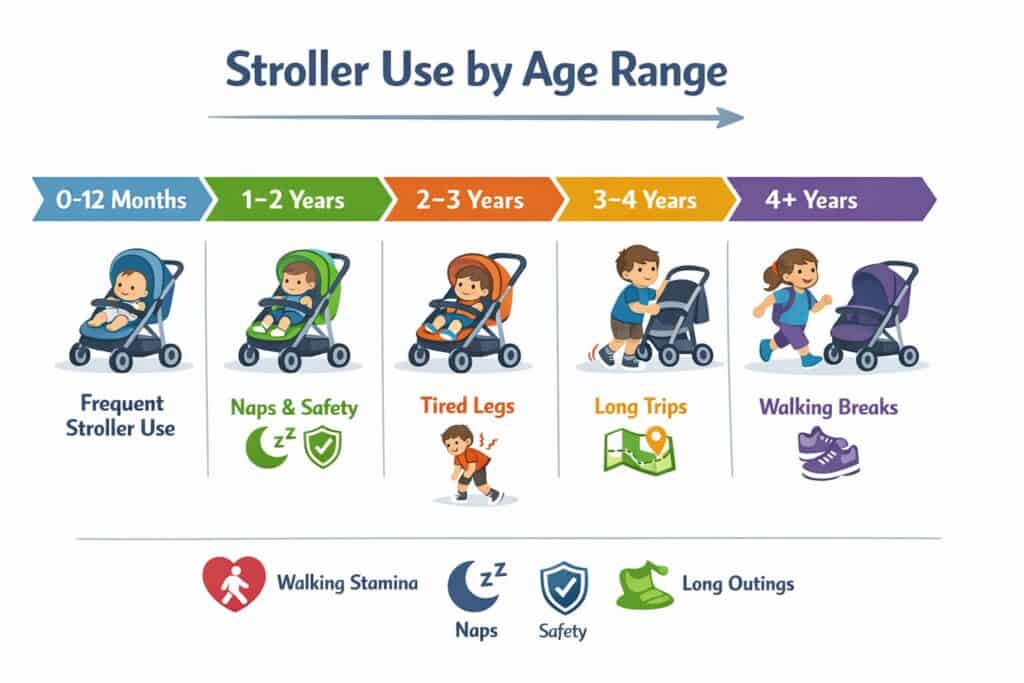
Infographic 1 : Stroller use by age range
Why Many Kids Still Use Strollers After Age Three
Extended stroller use is not a sign of delayed development. In many cases, it reflects practical parenting needs.
Long Outings and Travel
Theme parks, zoos, airports, and city sightseeing involve extended walking distances. Even physically strong preschoolers can experience fatigue, leading to overstimulation and behavioral challenges.
Busy Family Schedules
Families juggling multiple children, errands, or tight schedules often rely on strollers to maintain efficiency and safety, especially in crowded environments.
Health and Sensory Considerations
Children with:
- Low muscle tone
- Sensory processing challenges
- Developmental delays
- Medical conditions affecting stamina
may benefit from stroller use longer than peers, under professional guidance.
Expert Recommendations on Stroller Weaning
Pediatricians and child development specialists emphasize gradual transitions rather than abrupt elimination.
Key recommendations include:
- Limiting stroller use to specific scenarios
- Encouraging walking for short, predictable distances
- Offering rest breaks without defaulting to the stroller
- Avoiding pressure or comparison with other children
According to child mobility research, forced early independence can increase stress and resistance, while child-led transitions support confidence and autonomy.
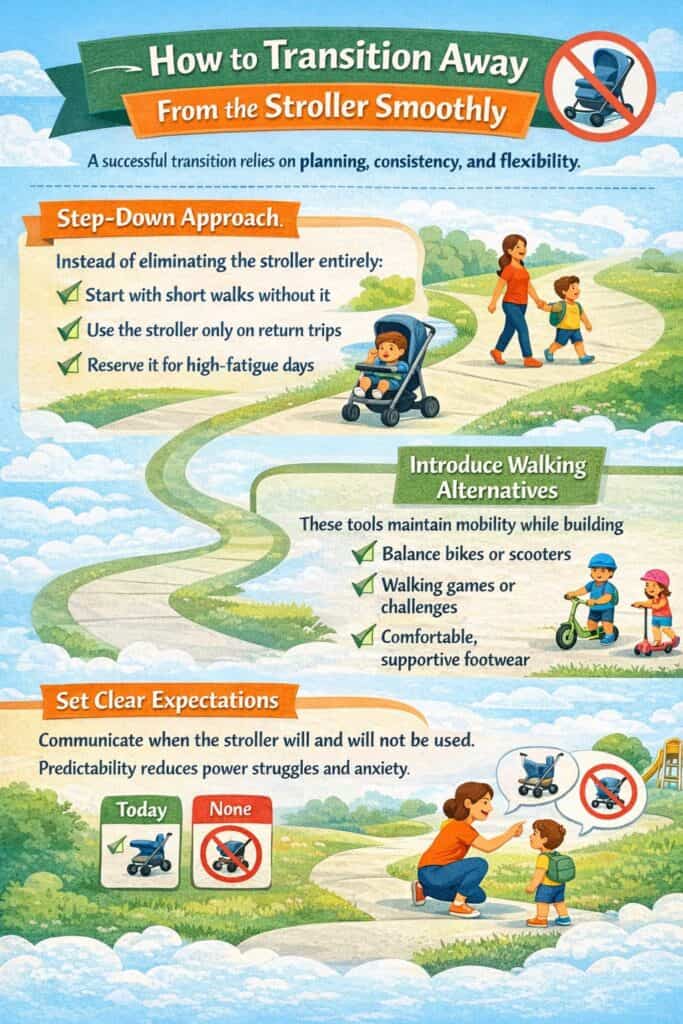
Infographic 2.: How to transition away from stroller
Situational Stroller Use: When It Still Makes Sense
Even children who primarily walk independently may still benefit from a stroller in certain contexts.
Urban Environments
Busy streets, public transportation, and crowded sidewalks increase safety risks. A stroller provides containment and visibility.
Travel and Vacations
Jet lag, unfamiliar terrain, and disrupted routines can reduce a child’s stamina. Lightweight travel strollers remain valuable tools through age five.
Extended Events
Festivals, parades, and all-day outings often exceed a young child’s physical limits.
In these cases, stroller use supports emotional regulation and physical well-being, not dependence.
How to Transition Away From the Stroller Smoothly
A successful transition relies on planning, consistency, and flexibility.
Step-Down Approach
Instead of eliminating the stroller entirely:
- Start with short walks without it
- Use the stroller only on return trips
- Reserve it for high-fatigue days
Introduce Walking Alternatives
- Balance bikes or scooters
- Walking games or challenges
- Comfortable, supportive footwear
These tools maintain mobility while building endurance.
Set Clear Expectations
Communicate when the stroller will and will not be used. Predictability reduces power struggles and anxiety.
Common Parental Concerns About Prolonged Stroller Use
Does Using a Stroller Too Long Delay Walking?
No. Children who can walk independently do not lose motor skills by occasionally riding in a stroller. Physical development depends on overall activity levels, not stroller avoidance.
Is Stroller Use After Age Four Socially Inappropriate?
Social norms vary widely by culture, location, and family structure. Developmentally appropriate choices should always outweigh external judgment.
Will My Child Become Lazy?
There is no evidence linking stroller use with reduced motivation or physical ability. Children naturally seek independence when ready.
Choosing the Right Stroller for Older Toddlers and Preschoolers
For families with children in the 3–5 age range, stroller features matter.
Important considerations include:
- Higher weight limits (up to 50 lbs or more)
- Ergonomic seating for larger bodies
- Easy fold mechanisms for quick transitions
- Durable wheels for longer distances
Modern strollers designed for extended use support both child comfort and parental convenience.
Cultural and Lifestyle Differences in Stroller Use
In walkable cities and travel-oriented cultures, stroller use often extends longer than in suburban or car-centric environments. Research on global parenting practices shows that mobility tools adapt to lifestyle demands, not developmental shortcomings.
Understanding this context helps normalize varied approaches to stroller transitions.
Final Thoughts on When Kids Stop Using Strollers
There is no universal deadline for when a child should stop using a stroller. Most children naturally stop using their strollers between the ages of 3 and 5, a transition guided by their physical stamina, emotional maturity, and the demands of your daily routine. Rather than following rigid milestones, the healthiest approach prioritizes your child’s readiness, overall safety, and your family’s practical needs.
Ultimately, a stroller is a tool, not a measure of independence. When used thoughtfully, it supports exploration and positive family experiences. If you find your children are outgrowing a traditional setup but still need a place to rest during long outings, you might consider a transition to a more versatile option. To find the right fit, check out our guide on Double Stroller vs Wagon: What’s Best for Your Family?