This guide explores the practical and safety-related lifespan of a stroller travel system, detailing age limits, developmental milestones, and transition signs to help you determine exactly when it’s time to upgrade your ride.
A stroller travel system is often one of the first major baby gear investments parents make. It promises convenience, flexibility, and long-term value—but many parents wonder how long can I use a stroller travel system and if it will actually last. Will it carry you through toddlerhood, or will you need to upgrade sooner than expected?
Understanding the lifespan of a stroller travel system helps you plan better and avoid unnecessary purchases. This guide breaks down how long you can use one across different developmental stages, what factors affect its longevity, and when it may no longer meet your needs.
What Is a Stroller Travel System?
Components of a Travel System
A stroller travel system typically includes three main components:
- An infant car seat
- A stroller frame or full stroller
- Adapters to attach the car seat to the stroller
This setup allows you to move your baby from the car to the stroller without disturbing them—especially useful during the newborn months.
How It Adapts as Your Child Grows
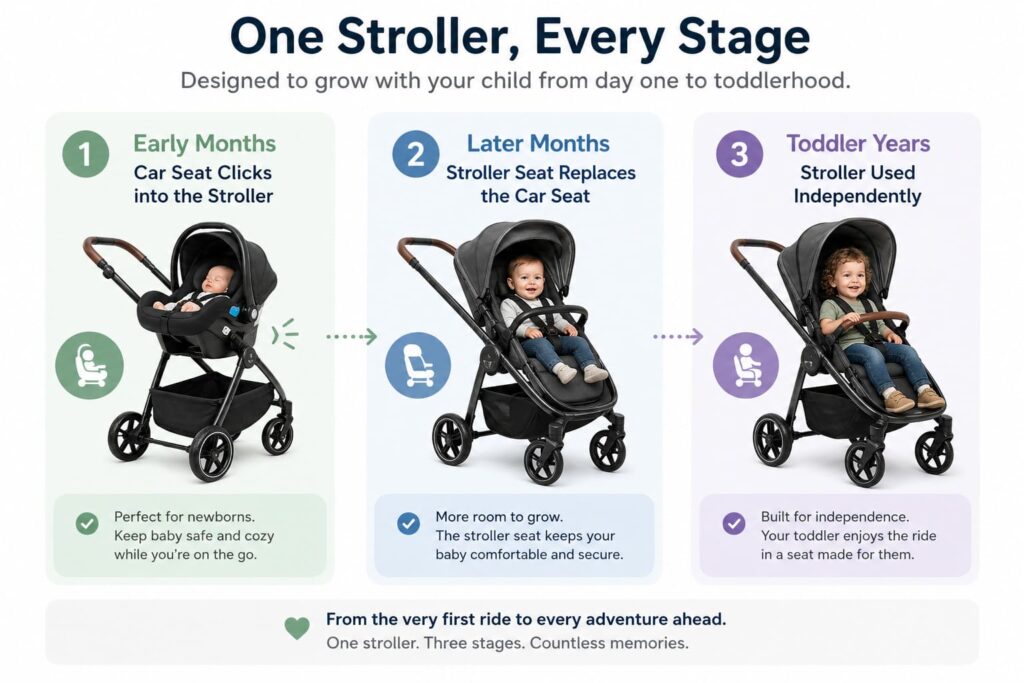
The system is designed to evolve with your child:
- Early months: car seat clicks into the stroller
- Later months: stroller seat replaces the car seat
- Toddler years: stroller used independently
Most systems are built to last from birth up to around 3–4 years, depending on usage and weight limits.
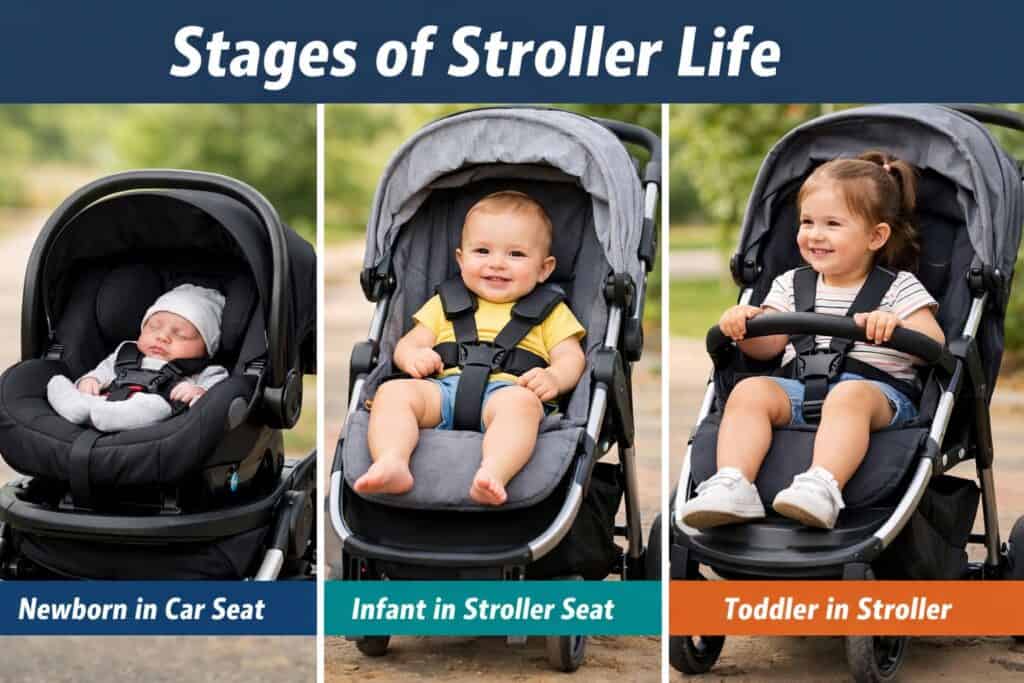
Stage 1: Newborn Phase (0–6 Months)
Role of the Infant Car Seat
During the newborn stage, the infant car seat is the primary component used. Babies lack the neck and core strength needed to sit upright safely in a stroller seat.
The travel system allows you to:
- Keep your baby in a reclined, supported position
- Move seamlessly between car and stroller
- Minimize disruptions to sleep
Safety and Comfort Considerations
At this stage, safety is critical:
- Ensure proper head and neck support
- Follow car seat time limits (usually no more than 1–2 hours at a stretch)
- Check that the car seat clicks securely into the stroller
This phase typically lasts until your baby develops better head control, usually around 5–6 months. For more information, check the website for Do’s and Don’ts for Stroller Safety
Stage 2: Infant Phase (6–12 Months)
Transitioning to the Stroller Seat
As your baby grows, they begin to outgrow the infant car seat—either by height, weight, or developmental readiness. It is often a good idea to Test Strollers Before Buying to ensure the next stage of your system remains comfortable and functional for your growing child.
Signs it’s time to transition:
- Stronger neck and trunk control
- Ability to sit with support
- Exceeding car seat limits
At this point, the stroller seat becomes the main feature of the travel system.
Developmental Changes to Consider
Babies in this stage are more alert and curious. A stroller should:
- Offer multiple recline positions
- Provide good harness support
- Include a canopy for sun protection
This phase is where the stroller begins to be used more frequently for walks, outings, and daily routines.
Stage 3: Toddler Phase (1–3+ Years)
Continued Use of the Stroller
Most stroller travel systems can be used well into toddlerhood. During this stage, the stroller is primarily used for:
- Longer outings
- Travel and errands
- Situations where walking long distances isn’t practical
Toddlers may walk part of the time but still rely on the stroller for rest.
Weight Limits and Durability
Typical stroller weight limits range from:
- 40 to 65 pounds (18–29 kg)
Durability becomes important here. A well-built stroller can comfortably last until:
- Age 3 for everyday use
- Age 4+ for occasional use
However, usage often declines naturally as children prefer walking.
When Does a Travel System Stop Being Practical?
Even if a stroller hasn’t reached its weight limit, it may stop being practical due to:
- Bulkiness compared to lightweight strollers
- Limited portability for travel
- A toddler’s preference for independence
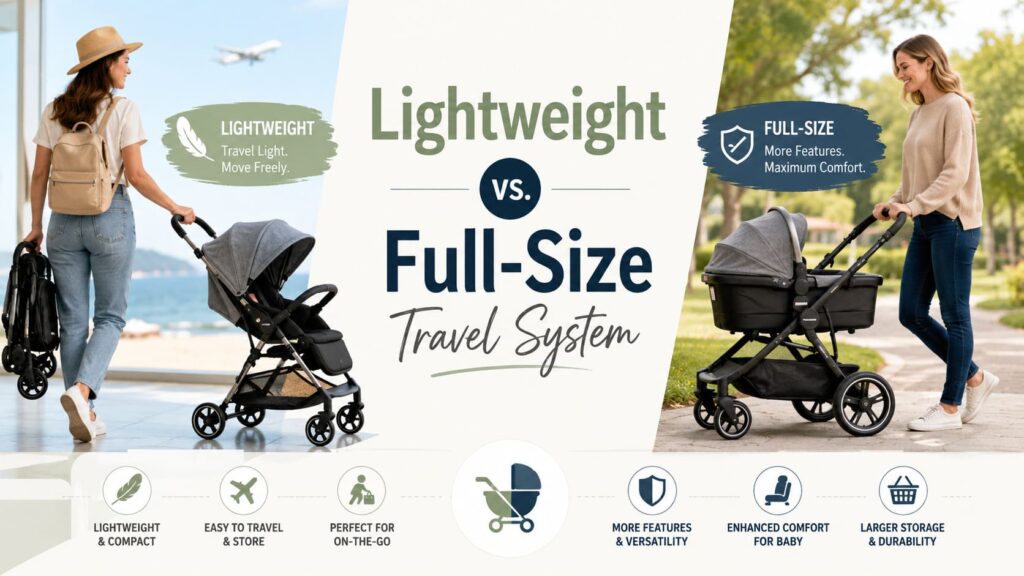
Many parents transition to:
- Lightweight or umbrella strollers
- Compact travel strollers
This shift often happens between 18 months and 3 years.
How Long Can I Ue a Travel System? – Longevity Factor
Several factors influence how long your travel system will last:
- Weight and height limits: Check manufacturer specifications
- Build quality: Higher-quality systems last longer
- Frequency of use: Daily use causes faster wear
- Child’s growth rate: Taller or heavier children may outgrow it sooner
Understanding these variables helps set realistic expectations.
Practical Considerations for Everyday Use
Parents often overlook practical aspects that affect long-term usability:
- Storage space: Larger systems can be harder to store
- Car compatibility: Bulky strollers may not fit easily in smaller trunks
- Ease of folding: Important for daily convenience
- Cleaning and maintenance: Removable, washable fabrics extend usability
A system that fits your lifestyle is more likely to be used longer.
Common Mistakes to Avoid
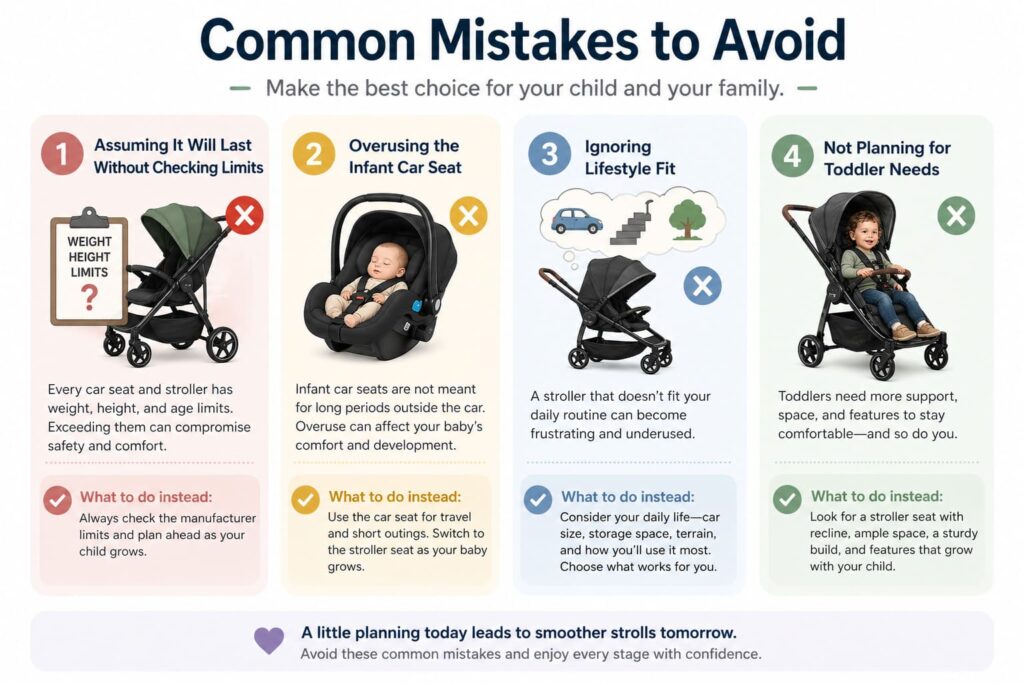
1. Assuming It Will Last Without Checking Limits
Many parents assume all systems last equally long. In reality, weight limits vary widely. Always verify specifications before purchase.
2. Overusing the Infant Car Seat
Keeping a baby in the car seat for extended periods outside the car can affect posture and comfort. Transition when developmentally appropriate.
3. Ignoring Lifestyle Fit
A bulky system may be impractical for city living or frequent travel. This can lead to early replacement.
4. Not Planning for Toddler Needs
Some systems are less comfortable for older toddlers. Lack of padding or legroom can reduce usability.
Additional Insights: Do You Always Need One?
A stroller travel system is not always necessary for every family. When deciding on your gear, you might ask yourself, How Many Strollers Do I Actually Need? as the answer depends heavily on your lifestyle.
You might benefit from one if:
- You frequently drive and need easy transitions
- You want an all-in-one solution from birth
Alternatives may be better if:
- You prefer babywearing in early months
- You travel often and need ultra-compact gear
- You plan to mix and match separate products
Choosing the right setup depends on your daily routine and preferences.
Conclusion
A stroller travel system can typically be used from birth up to around 3–4 years, but its practical lifespan often depends on your child’s growth and your lifestyle. While it’s most valuable during the first year, many families continue using the stroller into toddlerhood for convenience. To find a model that balances longevity with ease of use, you might want to check out our Top 10 Travel Systems for New Parents (2026 Comparison Guide).
By understanding each stage and recognizing when your needs change, you can get the most value out of your investment—without relying on it longer than it remains useful.
Frequently Asked Questions
How long can a baby stay in a stroller travel system?
A baby can use a travel system from birth through toddlerhood, typically up to 3–4 years, depending on weight limits and comfort.
When should I stop using the infant car seat with the stroller?
Most parents transition around 6–12 months, or when the baby exceeds the car seat’s height or weight limits.
Can a toddler still use a travel system stroller?
Yes, many strollers support toddlers up to 40–65 pounds, making them usable until around age 3 or older.
Is a travel system worth it for long-term use?
It can be, especially for convenience in the first year. However, many parents switch to lighter strollers later.
What is the average weight limit for stroller travel systems?
Most systems support between 40 and 65 pounds, but this varies by model.