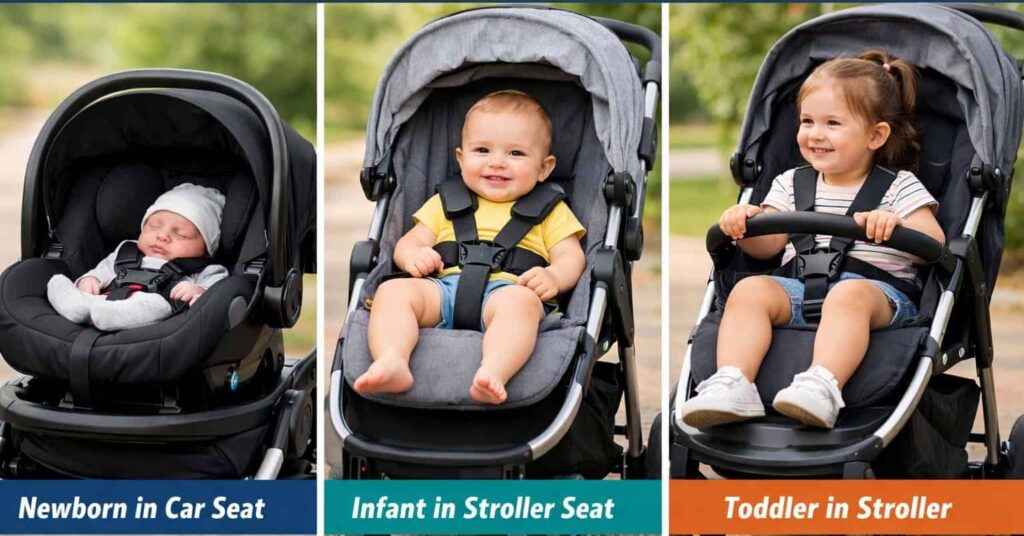
This guide compares the portability of compact strollers with the durability and features of larger models to help you decide which Lightweight vs. Full-Size Travel System best fits your lifestyle.
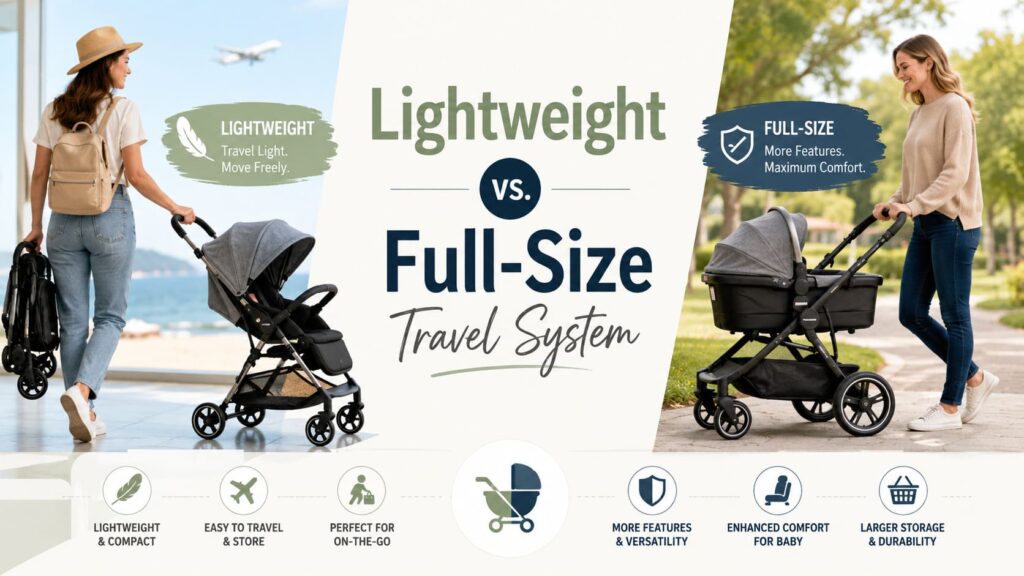
Choosing the right travel system is one of the most important decisions for new parents. With so many options available, it can be difficult to determine whether a lightweight or full-size travel system best suits your daily routine.
When comparing a lightweight vs. full-size travel system, both types are designed to simplify life by combining a stroller and an infant car seat, but they differ significantly in terms of size, weight, features, and usability.
This guide breaks down the key differences, advantages, and drawbacks of each option, along with real-life scenarios to help you make an informed decision.
What Is a Travel System?
Components of a Travel System
A travel system typically includes:
- An infant car seat
- A compatible stroller
- A base for easy car installation
These components are designed to work together seamlessly, allowing you to move your baby from car to stroller without waking them.
How Travel Systems Work
The car seat clicks directly into the stroller frame, creating a convenient, all-in-one solution for transportation. This setup is especially useful during the early months when babies sleep frequently.
Understanding Your Needs: Lightweight vs. Full-Size Travel System
To Choose the Right Stroller for Your Family, you must first evaluate how the equipment integrates into your specific environment. Lightweight systems prioritize portability with compact frames and quick-folding mechanisms, making them ideal for urban living and frequent travel. In contrast, full-size systems prioritize durability and comfort, featuring larger wheels and enhanced suspension for varied terrain
Practical Checklist: Lightweight vs. Full-Size Travel System
Before deciding, consider how the travel system will fit into your daily routine:
- Storage Space: Do you have room for a bulkier stroller?
- Car Size: Will the stroller fit easily in your trunk?
- Frequency of Use: Will you use it daily or occasionally?
- Terrain: Smooth sidewalks or rough paths?
- Lifting Requirements: Will you need to carry it frequently?
These factors often matter more than features alone.
Overview of Lightweight Travel Systems
Key Features
Lightweight travel systems are designed with portability and simplicity in mind. Common characteristics include:
- Compact stroller frames
- Reduced overall weight
- Quick folding mechanisms
- Minimalistic design
They are often easier to carry, store, and transport, making them a popular choice for parents on the go.
Typical Use Cases
Lightweight systems are commonly used in:
- Urban environments
- Travel situations (airports, public transport)
- Short trips and errands
- Homes with limited storage space
Overview of Full-Size Travel Systems
Key Features
Full-size travel systems prioritize comfort, durability, and functionality. They typically include:
- Larger, sturdier stroller frames
- Enhanced suspension systems
- Bigger wheels for varied terrain
- More storage space
These systems are designed for long-term use and can often accommodate growing children beyond infancy, a feature frequently highlighted in Travel System Reviews as a major benefit for budget-conscious families.
Typical Use Cases
Full-size systems are ideal for:
- Daily use over long distances
- Outdoor activities
- Suburban or rural environments
- Parents who prioritize comfort and versatility
Key Differences Between Lightweight and Full-Size Travel Systems
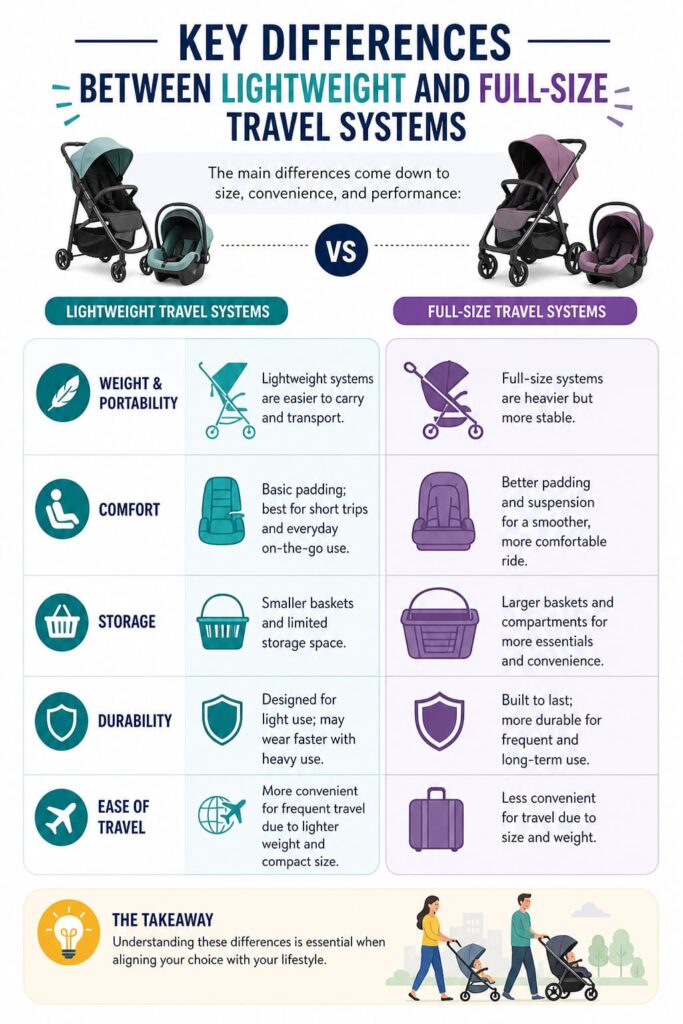
The main differences come down to size, convenience, and performance:
- Weight & Portability: Lightweight systems are easier to carry; full-size systems are heavier but more stable.
- Comfort: Full-size options typically offer better padding and suspension.
- Storage: Full-size strollers often include larger baskets and compartments.
- Durability: Full-size systems tend to last longer with frequent use.
- Ease of Travel: Lightweight models are more convenient for frequent travel.
Understanding these differences is essential when aligning your choice with your lifestyle.
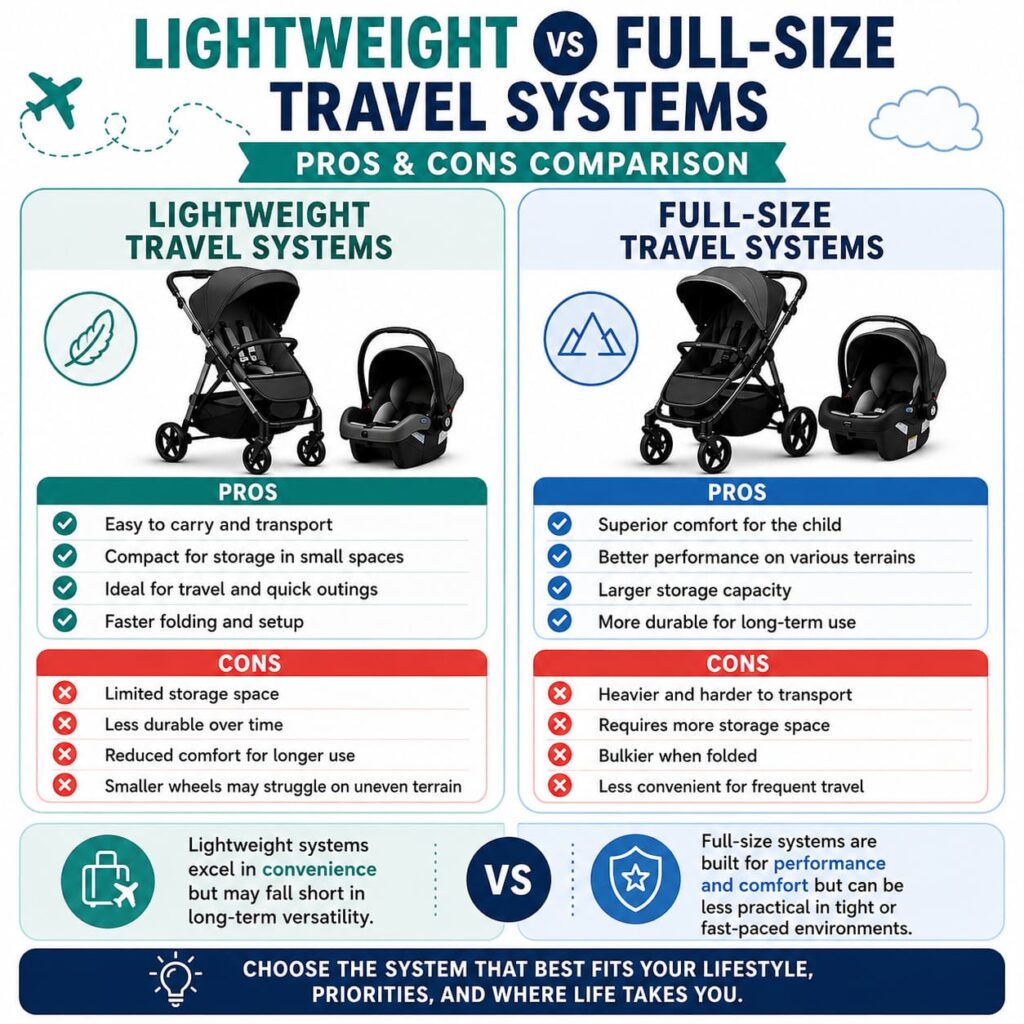
Pros and Cons of Lightweight Travel Systems
Pros
- Easy to carry and transport
- Compact for storage in small spaces
- Ideal for travel and quick outings
- Faster folding and setup
Cons
- Limited storage space
- Less durable over time
- Reduced comfort for longer use
- Smaller wheels may struggle on uneven terrain
Lightweight systems excel in convenience but may fall short in long-term versatility.
Pros and Cons of Full-Size Travel Systems
Pros
- Superior comfort for the child
- Better performance on various terrains
- Larger storage capacity
- More durable for long-term use
Cons
- Heavier and harder to transport
- Requires more storage space
- Bulkier when folded
- Less convenient for frequent travel
Full-size systems are built for performance and comfort but can be less practical in tight or fast-paced environments. If portability is your top priority, the Chicco Bravo Travel System is one of the most popular lightweight choices for urban parents.
Real-Life Use Cases: Which One Fits Your Lifestyle?
Urban Living
If you live in a city and rely on public transportation or walk frequently, a lightweight travel system is often more practical. It’s easier to maneuver through crowded spaces and carry up stairs.
Frequent Travelers
For families who travel often, lightweight systems are typically the better choice. Their compact design simplifies airport navigation and car trunk storage.
Suburban or Outdoor Lifestyle
If you regularly take walks in parks or on uneven terrain, a full-size system provides better stability and comfort. Larger wheels and suspension systems make a noticeable difference.
Everyday Errands and Long Walks
Parents who spend extended time outdoors or walking daily may benefit from a full-size system due to its durability and child comfort.
Common Mistakes to Avoid
Choosing Based on Looks Alone
Many parents focus on design rather than functionality. While aesthetics matter, usability should come first.
Ignoring Weight
A stroller may seem manageable in-store but feel much heavier during daily use. Always consider real-world handling.
Overlooking Storage Needs
Limited storage can become frustrating over time, especially during longer outings.
Not Considering Long-Term Use
Some lightweight systems may not adapt well as your child grows, leading to additional purchases later.
Additional Insights
When a Lightweight System Makes More Sense
- You travel frequently
- You live in a small apartment
- You need something easy to carry
When a Full-Size System Is Worth It
- You prioritize comfort and durability
- You walk long distances regularly
- You need extra storage for daily essentials
Hybrid Options
Some travel systems attempt to balance both worlds, offering moderate weight with enhanced features. These can be a good compromise for families with mixed needs.
Final Thoughts:
Lightweight and full-size travel systems each serve distinct purposes. Lightweight models prioritize portability and convenience, while full-size systems focus on comfort, durability, and versatility.
The best choice depends on your lifestyle, daily routines, and long-term needs. To better understand the basics before you buy, check out What Is a Stroller Travel System? Essentials Explained. By considering how and where you’ll use the system most often, you can select an option that truly supports your day-to-day life.
FAQ – Lightweight vs. Full-Size Travel System
What is the main difference between lightweight and full-size travel systems?
Lightweight systems are designed for portability and convenience, while full-size systems focus on comfort, durability, and long-term use.
Are lightweight travel systems suitable for everyday use?
They can be suitable for daily use in urban environments but may not perform as well for long walks or rough terrain.
Do full-size travel systems last longer?
Yes, full-size systems are generally more durable and adaptable as your child grows, making them better for long-term use.
Which option is better for travel?
Lightweight travel systems are typically better for travel due to their compact size and ease of transport.
Can I use a travel system from birth?
Most travel systems are designed for newborns, as they include an infant car seat compatible with the stroller.