IIf you’re wondering how many strollers do I actually need, you’re not alone. This is one of the most common — and surprisingly tricky — questions new and expecting parents ask. On one hand, stroller marketing makes it feel like you need one for every scenario. On the other hand, minimalism and budget concerns might push you toward buying just one.
The truth lies somewhere in between. The number of strollers you need depends on your baby’s age, your lifestyle, how often you travel, and how much convenience matters to you. This guide breaks it all down in a clear, research-backed, parent-tested way so you can make a confident decision without overspending.
Understanding Modern Parenting Mobility
Parenting today looks very different from even 20 years ago. Families are more mobile, cities are more walkable, and parents expect gear to adapt to fast-changing routines.
Modern strollers are specialized tools. Some are built for daily errands, others for jogging, and some specifically for travel. Expecting one stroller to do everything can lead to frustration, inconvenience, or even safety compromises.
According to the American Academy of Pediatrics, stroller safety and proper usage depend heavily on choosing the right stroller for the activity . That alone suggests that multiple strollers can sometimes be a practical choice rather than a luxury.
Factors That Decide How Many Strollers You Need
Before making a purchase, it’s essential to understand what truly influences the decision. Every family is different, but these factors matter most.
Your Baby’s Age and Development Stage
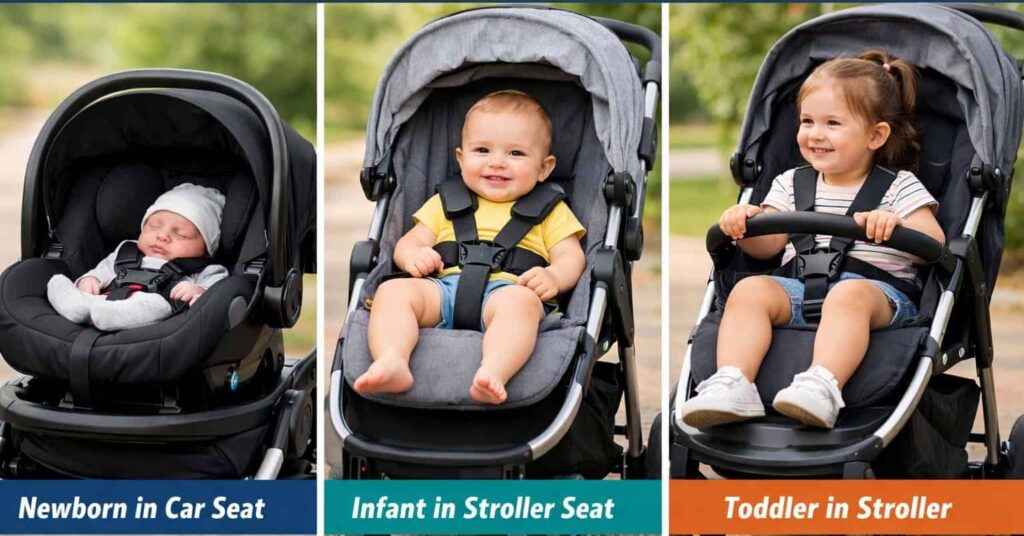
Newborns require strollers that fully recline or accept infant car seats. Toddlers, on the other hand, need upright seating, durability, and easy in-and-out access. Many parents find that the stroller that worked perfectly at three months becomes impractical by eighteen months.
As your child grows, your needs evolve. This is one of the biggest reasons parents end up with more than one stroller over time rather than all at once.
Urban vs Suburban Living
City parents who walk daily often prioritize durable full-size strollers with good suspension. Suburban families who mostly drive may prefer lightweight strollers for quick outings. If you travel frequently, a compact travel stroller can feel essential.
When deciding on the right number of strollers, your local environment is a major factor to consider.
Types of Strollers Every Parent Should Know
Understanding stroller categories makes the decision clearer and prevents unnecessary purchases, helping you choose the right stroller for your family.
Full-Size Strollers
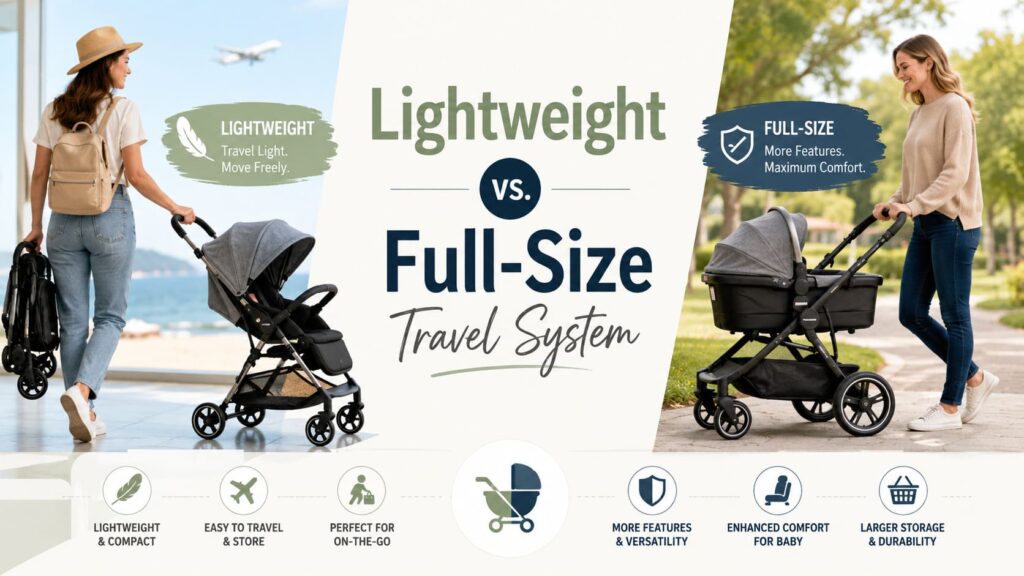
Full-size strollers are the workhorses of parenting. They offer storage, comfort, and long-term usability. Many parents rely on one as their primary stroller for daily use.
Best for: Neighborhood walks, shopping, long outings
Limitations: Bulky, not travel-friendly
Lightweight & Umbrella Strollers
These strollers shine when convenience matters most. They’re easy to fold, carry, and store. While not ideal for newborns, they’re fantastic for older babies and toddlers.
Best for: Travel, quick errands, daycare drop-offs
Limitations: Less storage and cushioning
Jogging Strollers
Designed with three large wheels and advanced suspension, jogging strollers are perfect for active parents. Safety experts recommend using them only when babies have strong head and neck control.
Best for: Running, trails, outdoor lifestyles
Limitations: Large footprint, not ideal indoors
Double & Convertible Strollers
If you plan to have more than one child, these strollers can adapt as your family grows. They’re versatile but often heavier.
Best for: Siblings close in age
Limitations: Size and weight
How many strollers do I need? – One Stroller vs Multiple Strollers
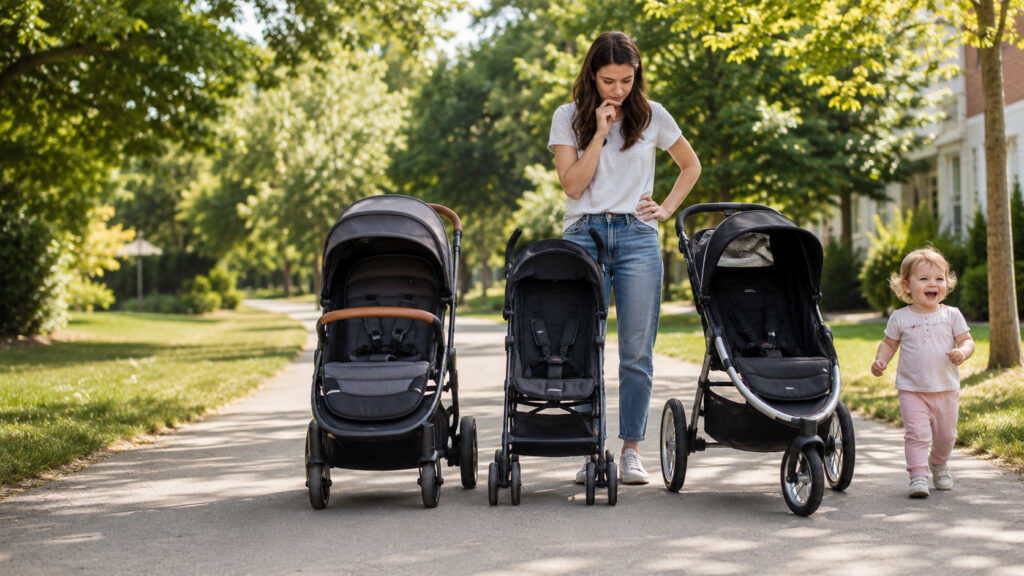
Asking the question can feel overwhelming, especially with so many options on the market. Some parents prefer sticking with one versatile stroller that can handle daily errands, walks, and occasional travel.
This approach is practical, saves space, and keeps costs down, but it may require compromises in portability or specialized features. On the other hand, owning multiple strollers allows families to choose the right stroller for each situation, whether it’s jogging, city walks, or travel.
Ultimately, the decision depends on your lifestyle, home space, and how often you plan to use each stroller.
Families with active routines or frequent travel often benefit from having more than one stroller. For instance, a lightweight travel stroller can be perfect for vacations, while a sturdier everyday stroller handles daily outings.
Parents of twins or siblings close in age may also find multiple strollers essential for convenience, often turning to resources like our Best Double Strollers for Infant and Toddler (2026 Guide) to find the perfect fit. However, some families thrive with just a single, high-quality stroller that adapts to different needs. The key is balancing practicality, cost, and comfort to determine what truly works for your family.
The honest answer for most families falls between one and three.
The Case for One Stroller
If you live in a small space, have a tight budget, or prefer simplicity, one high-quality stroller may be enough. Many modern strollers are designed to grow with your child.
Pros:
-
- Lower cost
-
- Less storage needed
-
- Simplified decision-making
Cons:
-
- Compromises on convenience
-
- Not optimized for all scenarios
The Case for Multiple Strollers
Having two strollers—typically a full-size and a lightweight—offers flexibility. Parents often report less stress and more freedom when they’re not forcing one stroller to meet every need.
For many families, the sweet spot answer is two.
Minimalist vs Prepared Parents
Parenting styles influence buying decisions more than most people realize.
Minimalist parents prefer multifunctional gear and fewer possessions. Prepared parents value having the right tool for each situation. Neither approach is wrong.
If you’re minimalist, you may start with one stroller and add another later if needed. Prepared parents often plan ahead, especially if they travel frequently or expect multiple children.
Budget, Storage, and Practicality
Money and space matter. Even if three strollers sound ideal, they’re not practical if you live in a small apartment or have limited storage.
A smart approach is phased purchasing:
-
- Start with a primary stroller.
-
- Identify gaps in daily life.
-
- Add a second stroller only if it solves a real problem.
Expert & Safety Insights
Pediatricians and child safety experts consistently emphasize matching the stroller to the activity. Using the wrong stroller—like jogging with a standard stroller—can increase injury risk.
Always follow manufacturer guidelines and safety standards from trusted organizations like the American Academy of Pediatrics.
Conclusion:
In the end, how many strollers your baby really needs depends on your lifestyle, space, budget, and parenting philosophy. For most families, one to two strollers strike the perfect balance between practicality and preparedness.
Start simple, stay flexible, and remember—parenting gear should support your life, not complicate it. Before making a final decision, take time to test strollers before buying to ensure they truly fit your daily routine. When chosen thoughtfully, the right stroller setup can make everyday moments smoother, safer, and more enjoyable.
Frequently Asked Questions
1. How many strollers do i need for one baby?
Most parents are comfortable with one or two strollers, depending on lifestyle and travel habits.
2. Is it wasteful to own multiple strollers?
Not if each stroller serves a distinct purpose and improves safety or convenience.
3. Can one stroller really do everything?
Some come close, but most involve compromises in weight, size, or performance.
4. When should I buy a second stroller?
When your daily routine highlights a limitation in your current one.
5. Do I need a travel stroller?
If you travel more than twice a year, a travel stroller is often worth it.
6. How many strollers do i need for two kids?
Usually one double stroller plus a lightweight single stroller works best.