Choosing the right way to transport your children is more than a convenience decision—it directly affects daily comfort, safety, and how smoothly family life runs. For families with two young children, the comparison might come down to double stroller vs wagon. Both options are popular, both have evolved significantly in recent years, and both promise to make outings easier. Yet they serve very different parenting styles and lifestyles.
In this comprehensive guide, we examine every practical detail so families can decide with confidence, clarity, and long-term value in mind.
Understanding the Differences
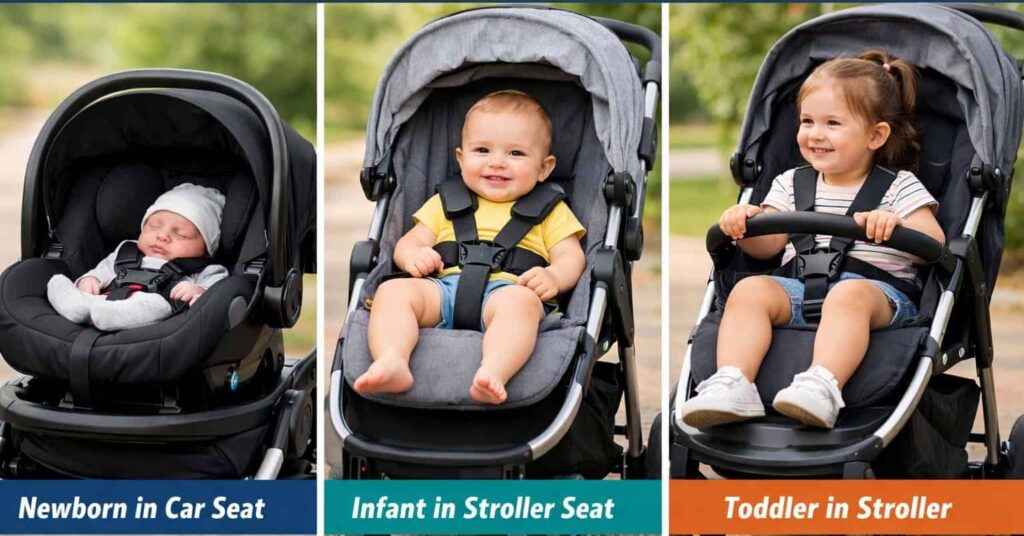
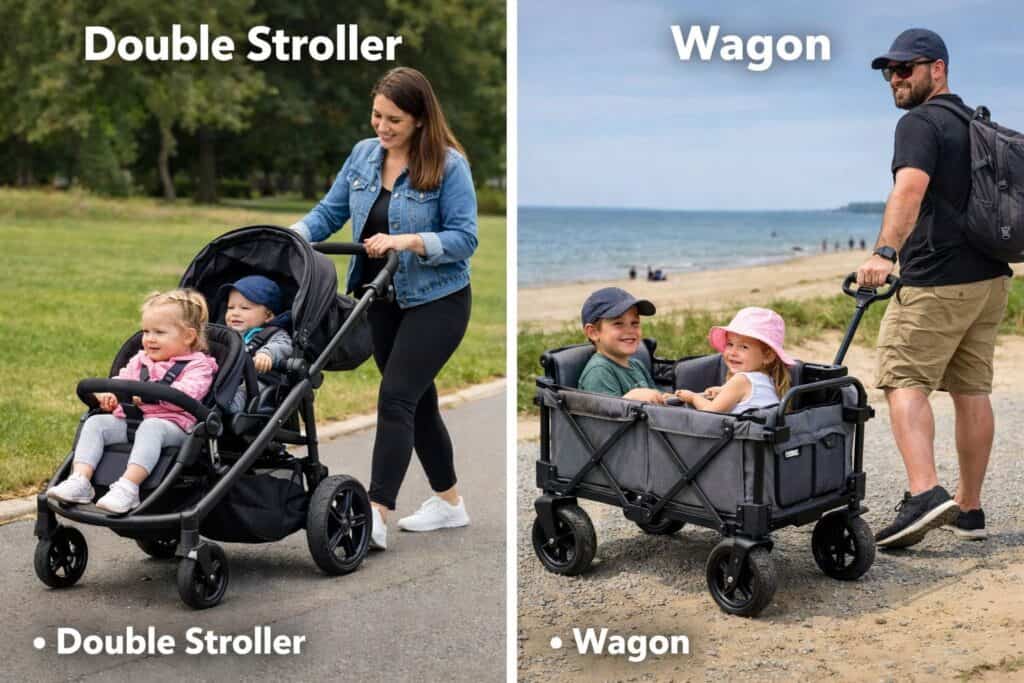
When we evaluate double stroller vs wagon, the first thing to understand is their core purpose. A double stroller is designed for structured, forward-facing mobility. Children sit in designated seats with safety harnesses, sun canopies, and recline options. Everything about a stroller emphasizes control, predictability, and ease of navigation in everyday environments. For parents managing children of different ages, finding the best double strollers for infant and toddler is often a top priority.
A wagon, by contrast, is built around flexibility. Children sit lower to the ground, often facing each other, with more legroom and freedom to move. Modern wagons include padded seating, harness systems, and push or pull handles, but their strength lies in space and versatility rather than precision maneuvering.
This fundamental difference shapes how each option performs in real life.
Comfort and Seating Experience for Growing Children
Comfort is not just about cushioning—it’s about posture, adaptability, and how children experience the ride. Double strollers provide individual seating with ergonomic design. Recline features allow infants and toddlers to nap comfortably, while footrests and head support help maintain proper alignment during longer outings.
Wagons, on the other hand, offer a more relaxed environment. Children can stretch out, sit cross-legged, or turn toward siblings. This freedom often reduces resistance from toddlers who dislike being restrained. However, the open seating design may lack the structured support younger infants require unless the wagon is specifically designed for that age group.
Families with nap-prone toddlers often prefer strollers, while families with energetic preschoolers appreciate the openness of wagons.
Safety Features and Stability Considerations
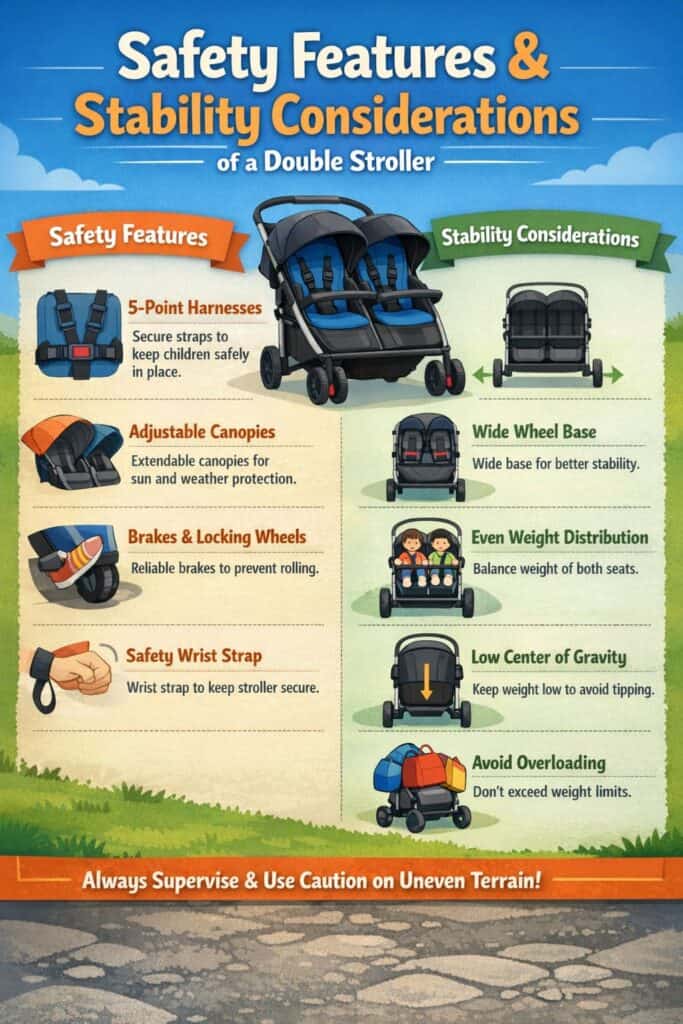
Safety remains a top priority when comparing double stroller vs wagon. Double strollers are typically engineered to meet strict safety standards, featuring five-point harnesses, locking swivel wheels, and higher seating positions that keep children away from ground-level hazards.
Modern wagons have made significant safety advancements, including three- or five-point harnesses, parking brakes, and reinforced frames. Their lower center of gravity can improve stability, especially on uneven terrain, but it also places children closer to dust, debris, and environmental exposure.
For crowded sidewalks, urban crossings, and public transportation, strollers often feel more controlled. For parks and open areas, wagons provide safe, stable alternatives with added flexibility.
Double Stroller vs Wagon for Maneuverability and Daily Use
How Double Stroller vs Wagon Perform in Tight Spaces
Maneuverability is where many families feel the difference immediately. Double strollers, especially tandem models, are designed to navigate narrow aisles, doorways, and crowded sidewalks. Swivel wheels and lightweight frames allow for sharp turns and one-handed steering.
Wagons tend to be wider and heavier. While push-handle wagons improve steering, tight indoor spaces can still be challenging. Pulling a wagon through crowds or narrow corridors often requires more physical effort and planning. For a deeper look at how these features compare, check out this Quick Guide on Wagons vs. Double Strollers.
Families who run frequent errands, use public transport, or navigate busy environments often find strollers more efficient for daily use.
Storage Capacity and Carrying Essentials
Storage is one area where wagons consistently outperform. Wagons act as both child transport and cargo carrier, easily accommodating diaper bags, snacks, toys, blankets, and more. This eliminates the need for additional bags and keeps everything accessible.
Double strollers usually include under-seat baskets, but space is limited and weight distribution matters. Overloading can affect balance and steering, especially with two children onboard.
For long outings, travel days, or events, wagons offer unmatched convenience. For short trips, stroller storage is often sufficient.
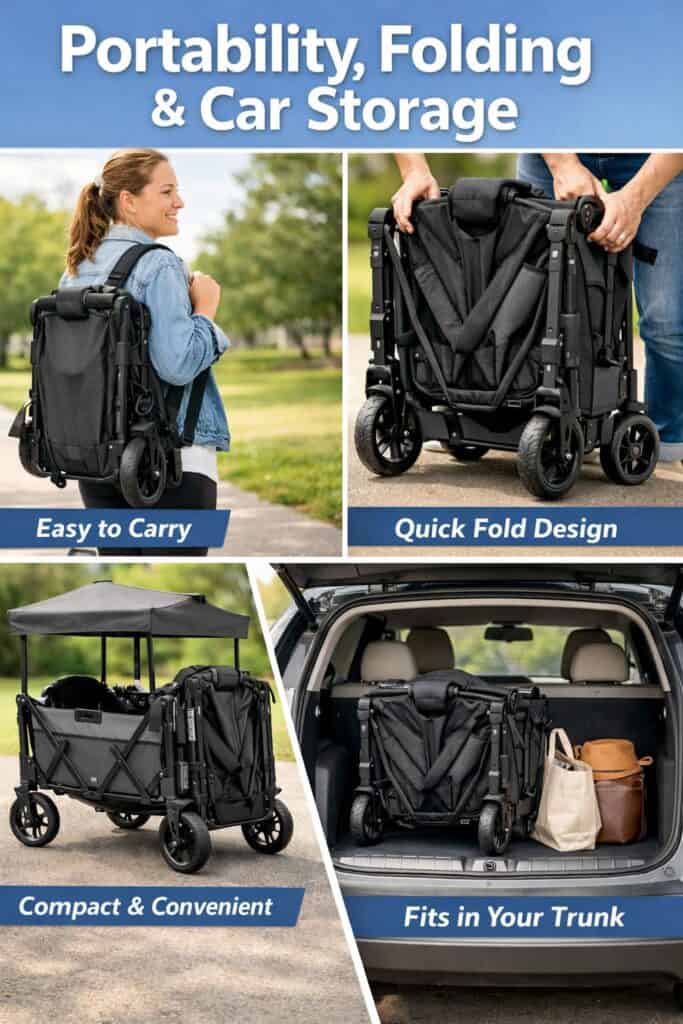
Portability, Folding, and Car Storage
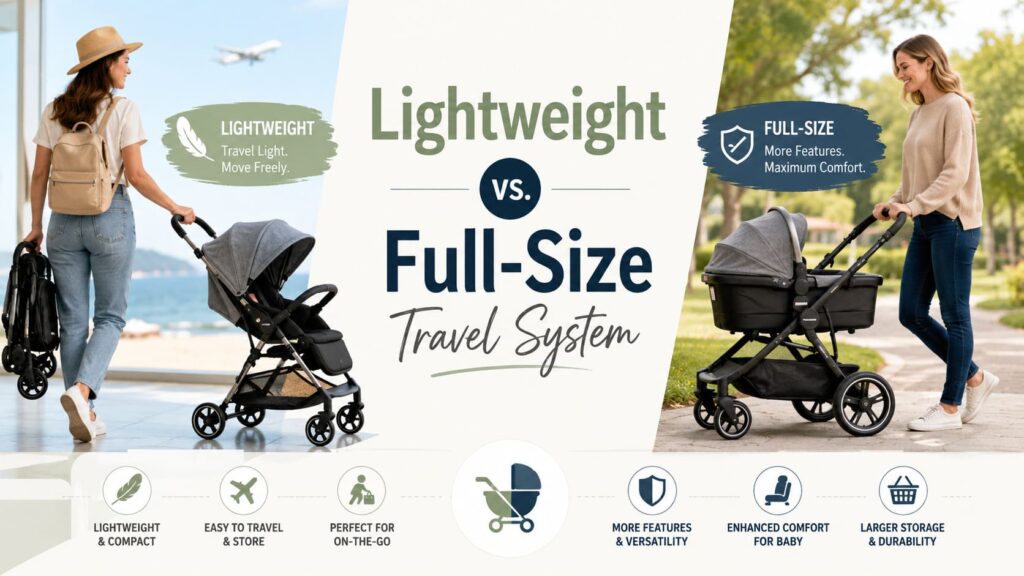
Portability is a daily reality for most families. Double strollers are engineered to fold compactly, often fitting into standard car trunks. Many models fold with one hand and stand upright when collapsed.
Wagons, while foldable, generally remain bulky and heavy. Lifting them into vehicles can be challenging, especially for smaller cars or parents managing children at the same time.
If quick loading, frequent travel, or limited storage space is part of your routine, strollers integrate more seamlessly.
Terrain Performance and Outdoor Adventures
Terrain adaptability plays a major role in the double stroller vs wagon decision. Wagons excel on grass, gravel, sand, and uneven paths. All-terrain wheels and suspension systems make them ideal for parks, beaches, festivals, and outdoor events.
Double strollers perform best on paved surfaces. While jogging or all-terrain strollers exist, they are often larger and less convenient for everyday use.
Families who spend significant time outdoors often gravitate toward wagons for their durability and versatility.
Age Range and Long-Term Value
Age compatibility affects long-term usefulness. Double strollers are ideal from infancy through early toddlerhood, especially models that support infant car seats. However, many children outgrow strollers earlier than parents expect.
Wagons often support higher weight limits and can be used well into early childhood. This extended usability makes them appealing for families seeking long-term value.
Understanding growth milestones helps families choose wisely, especially when planning future needs.
Cost Comparison and Investment Perspective
Cost varies widely in both categories. High-end double strollers and premium wagons can both represent significant investments. Value depends less on price and more on how often and where the product is used.
Urban families may justify a premium stroller for daily use, while outdoor-focused families often see greater return from a wagon.
Lifestyle Fit: Choosing What Truly Works
The best choice is the one that aligns with daily routines. Urban, schedule-driven families often prefer double strollers. Adventure-oriented families with flexible outings often favor wagons. Some families choose both, using each where it excels.
Bottom Line:
When deciding between double stroller vs wagon, the right answer depends on lifestyle, environment, and how children grow. By weighing comfort, safety, maneuverability, storage, terrain, and longevity, families can make informed decisions that reduce stress and enhance daily life.
As children grow, mobility needs change. Knowing milestones such as When Do Kids Stop Using Strollers? allows families to plan smarter, longer-lasting purchases.